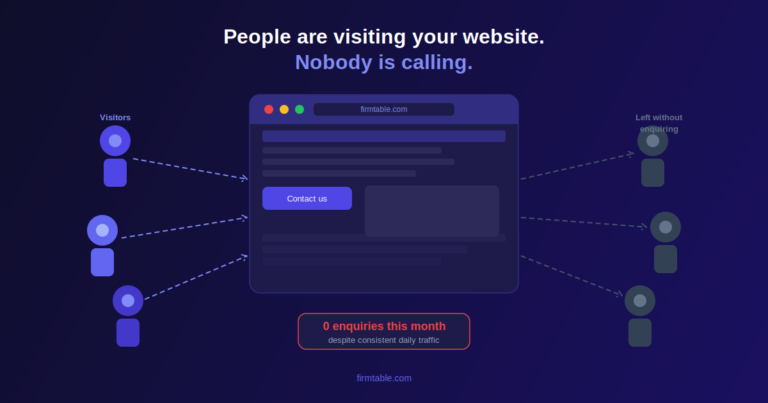
There is a specific kind of exhaustion that hits e-commerce founders around the 20-orders-a-week mark.
Below that doing things manually feels okay. You message each customer on WhatsApp yourself. You update your stock spreadsheet after each sale. You personally follow up when someone abandons their cart. It feels personal. Like good service.
Then the orders pick up. Suddenly you are spending three to four hours a day on tasks that have nothing to do with your actual product. You are copy-pasting customer addresses. You are sending the same order confirmed message for the fortieth time this week. You are answering ‘Is this available in red?’ at 11pm because the store does not sleep even when you do.
This is the part of running an online business in India that nobody really prepares you for. The operations side does not scale on its own. You have to build systems for it.
The good news is that in 2025 those systems are genuinely accessible. You do not need a developer. You do not need to spend lakhs. Most of what I am going to describe can be set up with no-code tools for a few thousand rupees a month or sometimes less.
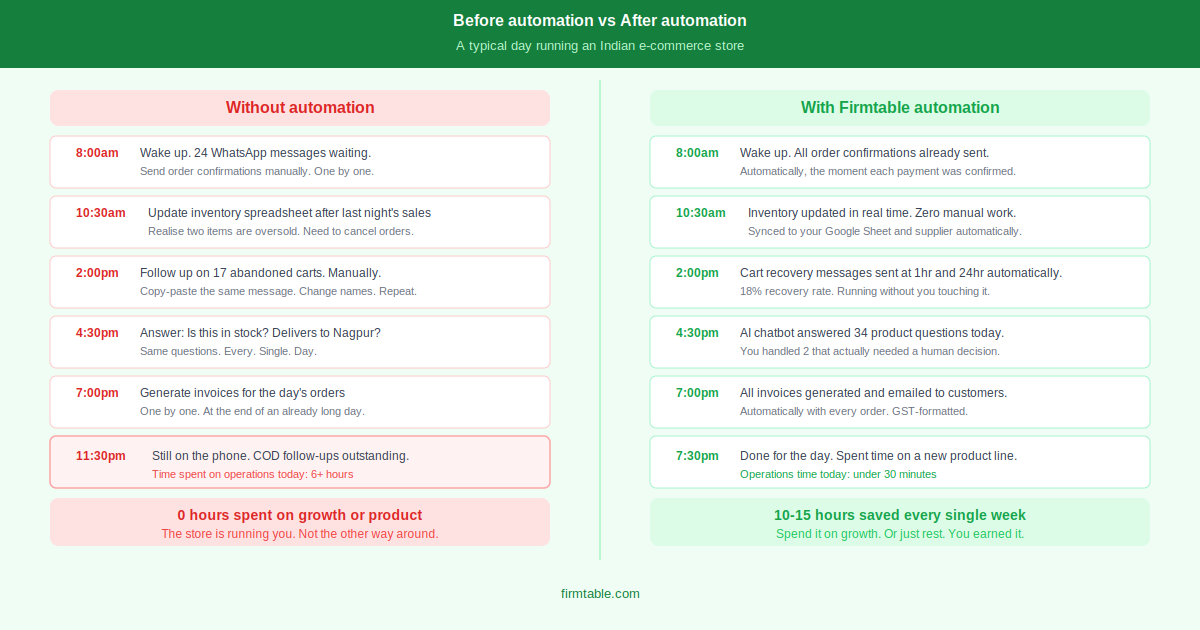
Let us talk about where your time is actually going
Before getting into solutions it is worth naming the specific tasks that eat up most e-commerce founders’ time. I want to be specific because ‘automate your business’ is advice that sounds good but means nothing without examples.
Here is what most Indian e-commerce founders are doing manually that they absolutely do not need to be.
Sending order confirmation messages on WhatsApp
If you run a D2C brand or a small online store in India you already know customers expect WhatsApp communication not email. So you are sending order confirmations manually for every single order. Typing them out or copy-pasting a template.
At 20 orders a day that is easily 40 to 60 minutes spent on messages that could fire automatically the moment a payment is confirmed.
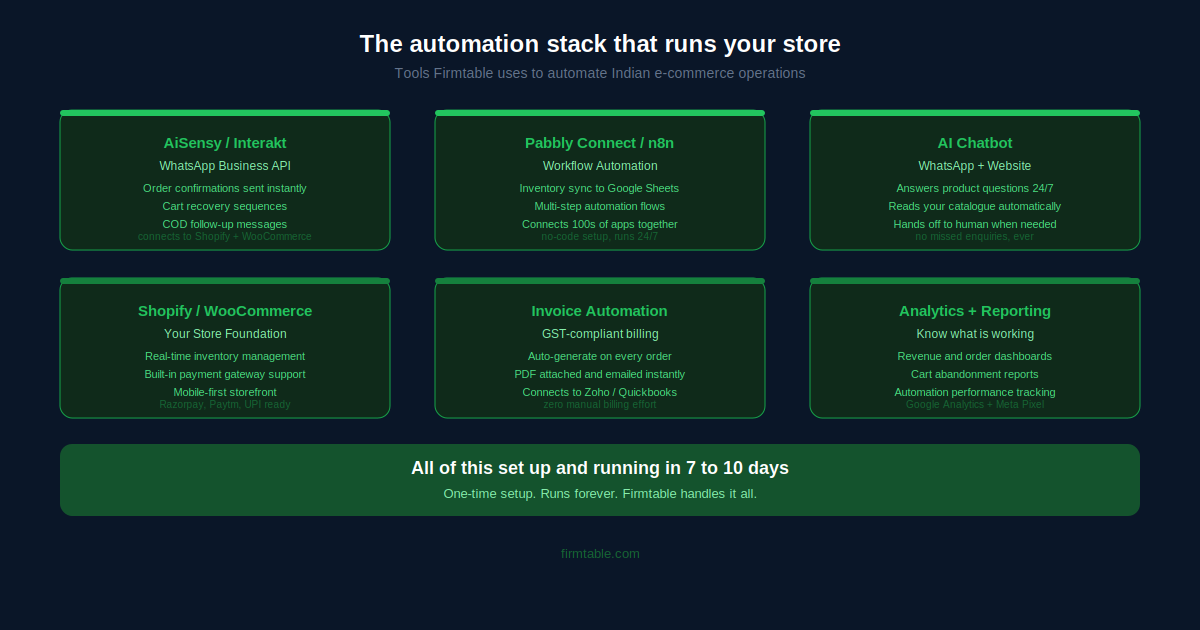
Tools like AiSensy and Interakt connect directly to WooCommerce and Shopify and send pre-built WhatsApp messages with the customer’s name, order details and delivery estimate automatically. The customer gets a better experience. You get that hour back.
Chasing people who left things in their cart
Cart abandonment in India runs above 70% for most product categories. That means for every 10 people who add something to their cart 7 leave without buying.
Some were never serious. But a meaningful percentage just got distracted or wanted to think about it or needed a small nudge. A single WhatsApp message an hour after abandonment followed by a reminder the next morning can recover 15 to 25% of those sales. Done manually this is impractical. Done automatically it runs in the background while you are doing everything else.
Answering the same questions over and over
Do you deliver to Hyderabad? Is the red one available in XL? What is your return policy? How long does delivery take?
These are not bad questions. They are reasonable things for a customer to want to know. But if you are answering 15 to 20 variations of these every day across Instagram DMs, WhatsApp and your website chat that is an hour of your day minimum on information that is already on your website.
A well-configured WhatsApp chatbot can handle all of this. Not the kind that gives robotic irrelevant responses but the modern ones that read your product catalogue and policies and respond in a way that feels like a real person. They only hand off to you when something genuinely needs a human decision.
Updating inventory after every sale
If you are running your store on WooCommerce or Shopify and also maintaining a separate Excel sheet for stock management you are doing double work and creating the conditions for errors.
A properly set up store updates inventory automatically with every sale. If you need that data somewhere else like a Google Sheet for your supplier or a Notion board for your team, automation tools like Pabbly Connect or n8n can sync it in real time without you touching anything.
Generating and sending invoices
Every sale needs an invoice. For GST-registered sellers it needs to be properly formatted. Doing this manually after each order is tedious and easy to fall behind on especially when volume picks up.
This is a fully automatable task. Connected to your store and your accounting tool an automation can generate the invoice attach it as a PDF and email it to the customer the moment the order is confirmed. Every time. Without exception.
Payment follow-ups for COD orders
Cash on delivery is still popular in many categories especially in tier-2 and tier-3 cities. But COD means uncertainty. You do not know if the customer will actually accept the package and returns are expensive.
An automated WhatsApp message a day before delivery confirming the order details and delivery time significantly reduces COD returns. It keeps the customer engaged and surfaces issues early when you can still do something about them.
Between these six tasks most e-commerce founders are spending 10 to 15 hours a week on things an automation handles in seconds. That is nearly a part-time job worth of work you are doing that you do not have to.
Is this expensive to set up?
This is the question I hear most often. The answer is almost always a pleasant surprise.
The tools involved like AiSensy, Pabbly Connect and n8n have plans starting from a few hundred to a couple of thousand rupees per month depending on your order volume. Compare that to hiring even a part-time operations assistant at Rs 10,000 to Rs 15,000 per month. The economics are not close.
The one-time setup cost of getting these automations configured tested and connected properly is a professional investment. But it does not repeat. Once it is built it runs. We have had clients come back six months later saying they have not touched it once. It just works.
How do you know if you are ready for this?
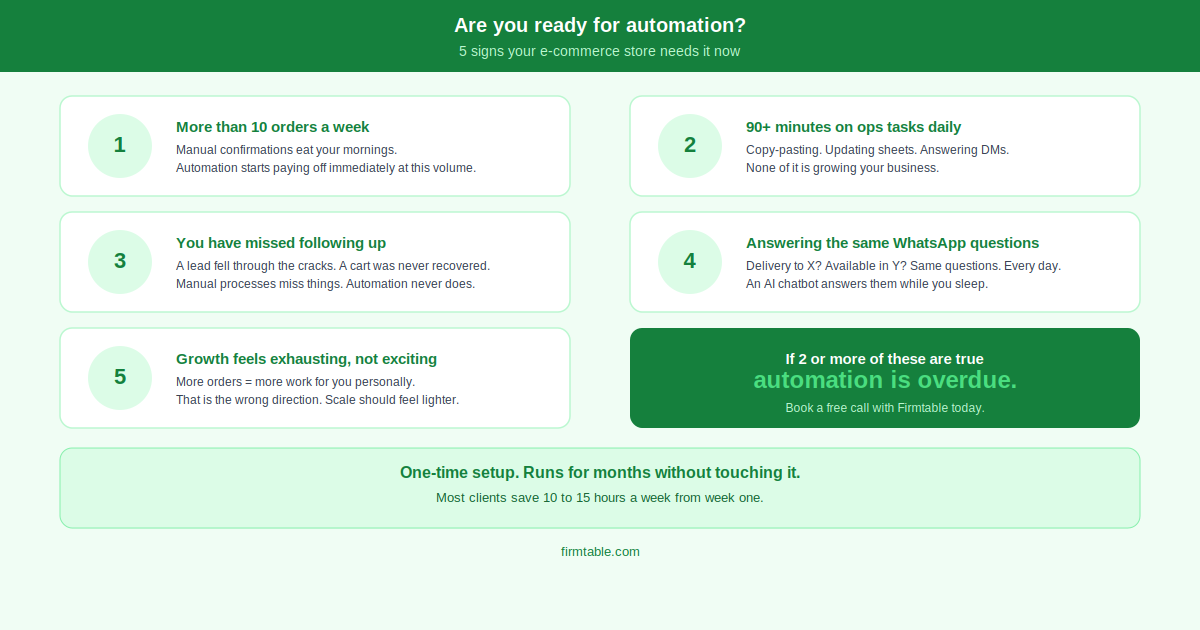
Honestly? If you are reading this and nodding along to any of the scenarios above you are already past ready. Here is a simple check:
- You are fulfilling more than 10 orders a week
- You spend more than 90 minutes a day on tasks that feel repetitive
- You have missed following up with a customer because things slipped through
- You have answered the same WhatsApp question more than three times today
- Growth feels exhausting rather than exciting because more orders means more personal work
If two or more of those are true the automation conversation is overdue.
How we approach this at Firmtable
When we build e-commerce stores on Shopify or WooCommerce we do not just build the store and hand it over. We connect the automation layer from the beginning. Order confirmations. Cart recovery. Inventory sync. Invoice generation. So when you start getting orders the operations side is already handled.
For stores that are already live and growing we start with an audit. We look at where your time is going, map the highest-impact automation opportunities and implement them. Most clients have their automation stack running within a week to ten days.
The goal is simple. You should be spending your time on things that actually need you. Not on copy-pasting confirmation messages at midnight.
Want to know which parts of your store can be automated? Book a free call with Firmtable